
Beulah Louise Henry facts for kids
Quick facts for kids
Beulah Louise Henry
|
|
|---|---|

Louise Henry with her latest invention
|
|
| Born | September 28, 1887 Raleigh, North Carolina
|
| Died | February 1, 1973 (aged 85) |
| Alma mater | North Carolina Presbyterian College Elizabeth College |
| Occupation | Inventor, businesswoman |
| Awards | National Inventors Hall of Fame |
Beulah Louise Henry (September 28, 1887 – February 1, 1973) was a famous American inventor and businesswoman. She created more than one hundred different inventions and received 49 official patents during her lifetime. A patent is a legal document that gives an inventor the sole right to make, use, or sell their invention.
Henry was so productive and creative that newspapers often called her the "Lady Edison." This nickname compared her remarkable output to the famous American inventor Thomas Edison. She solved real-world problems by improving tools used in everyday life, manufacturing, and office spaces.
At a time when very few women worked in technology, Henry managed her own companies in New York City. She proved that anyone with a strong vision and persistence could succeed as an inventor and entrepreneur.
Contents
Early Life and Growing Up
Childhood in North Carolina
Beulah Louise Henry was born on September 28, 1887, in Raleigh, North Carolina. Her parents were Walter R. Henry and Beulah Henry. She came from a family with a deep history in the United States. She was a descendant of Patrick Henry, a founding leader during the American Revolution known for his patriotic speeches. Her grandfather, W. W. Holden, served as the governor of North Carolina.
Growing up, Henry showed a curious and creative mind. She loved to paint pictures, write songs, and listen to music. However, her favorite activity was studying everyday objects to figure out how to make them better.
When she was only nine years old, she began sketching brand-new mechanical ideas in notebooks. She noticed small annoyances in the world around her and immediately tried to design practical solutions. For example, she drew an automatic hat-tipper designed to lift a gentleman's hat politely whenever he walked past a neighbor.
Schooling and First Inventions
Henry attended school in North Carolina and later studied at North Carolina Presbyterian College. She also attended Elizabeth College in Charlotte, North Carolina, between 1909 and 1912.
While still a college student in 1912, Henry earned her very first patent for a brand-new type of ice cream freezer. In those days, freezing homemade ice cream required large chunks of ice and heavy physical labor. Her clever vacuum-insulated design kept the cold air inside, allowing families to make sweet treats much faster using far less ice.
This early success showed Henry that her ideas had real commercial value. Instead of following a traditional career path, she decided to dedicate her entire life to inventing useful consumer products.
Building an Inventing Career in New York City
Becoming an Independent Business Leader
After finishing college, Henry moved with her mother to New York City to start her professional career. New York was the center of American commerce, publishing, and manufacturing.
Unlike many inventors who worked in factories or school laboratories, Henry ran her business from hotel suites. She lived in comfortable New York hotels throughout her adult life. She established the Henry Umbrella and Parasol Company and later formed the B.L. Henry Company to develop her product lines.
Henry hired draftsmen, model builders, and patent lawyers to assist her. She directed these specialists to assemble working prototypes based on her detailed creative visions.
Working With Major Manufacturers
As her fame grew, large industrial companies sought her advice. From 1939 to 1955, Henry worked as an inventor and technical consultant for the Nicholas Machine Works.
She also consulted for the Mergenthaler Linotype Company, a major manufacturer of professional printing and typesetting machinery, and the International Doll Company.
During an era when women held only about two percent of all United States patents, Henry became widely respected across multiple major manufacturing industries.
How Beulah Louise Henry Created Her Inventions
Creative Problem Solving Without Engineering Degrees
Henry never completed a formal degree in mechanical engineering or advanced mathematics. Instead of stopping her, this lack of standard training gave her the freedom to think outside traditional limits.
When asked about her process, Henry explained that complete mechanical designs would appear in her imagination. She could visualize how gears, levers, springs, and fabrics would interact before building anything.
Prototyping With Everyday Household Items
To prove that her ideas worked, Henry built early working models using materials found around the house.
- She carved gears and hinges out of bars of bath soap.
- She used buttons, paper clips, wire coat hangers, and ribbons to build linkages.
- She glued cardboard and wood scraps into tiny working machines.
When professional engineers claimed a concept was mechanically impossible, Henry presented her homemade working models to demonstrate exactly how the mechanism moved.
Major Inventions and Mechanical Breakthroughs
The Bobbin-Free Sewing Machine
One of Henry's greatest mechanical achievements was the development of the bobbin-free sewing machine. For generations, sewing machines used two threads: an upper thread fed from a spool and a lower thread wound onto a small wheel called a bobbin.
Bobbins caused frequent problems for workers. The thread inside the bobbin ran out quickly, requiring the sewer to stop, take the machine apart, rewind the spool, and rethread it. Bobbins also jammed easily, breaking delicate threads and slowing down production.
Henry solved this problem by designing a machine that used continuous double chain stitching directly from primary spools without any internal bobbin. Her new design:
- Eliminated frustrating thread tangles and machine jams.
- Allowed operators to sew at more than double the speed of traditional machines.
- Permitted the use of finer, stronger threads for delicate fabrics.
- Saved clothing factories hundreds of hours of lost labor time.
Adapted versions of Henry's chain-stitch technology are still used in modern industrial garment manufacturing.
The Protograph and Typewriter Improvements
Before modern photocopiers and digital computers, office workers had to produce multiple copies of documents using carbon paper. Carbon paper was messy, smudged easily, and left dark ink stains on hands and clothing.
In 1932, Henry invented the "Protograph." This special attachment plugged directly into standard manual typewriters. It used a system of ribbon-inking mechanisms to type up to four clear, original-looking copies at the same time without needing any messy carbon sheets.
Her typewriter improvements paved the way for advanced multi-copy paperwork systems used in offices, banks, and shipping departments for decades.
Lifelike Toys and Dolls
Henry loved designing toys that brought joy to young children. She noticed that antique porcelain and wooden dolls were heavy, fragile, and stiff.
To make toys safer and more fun, Henry designed soft, lightweight dolls:
- She created internal rubber tubing frameworks that allowed dolls to be inflated with air, making them light enough for toddlers to carry easily.
- She invented the "Miss Illusion" doll, which featured special internal counterweights that let the doll close its eyes or change its eye color smoothly.
- She patented snap-on water-resistant rubber limbs so children could bathe their dolls in water without damaging internal fabrics.
- She designed floating aquatic toys and soft stuffed animals with flexible joints.
Fashion and Daily Convenience Inventions
Henry also created many popular fashion accessories:
The Snap-On Parasol
In the 1920s, parasols (sun umbrellas) were important fashion accessories. However, buying a different parasol for every dress was expensive. Henry invented a parasol with interchangeable, snap-on fabric covers. A woman could keep a single frame and simply snap on a matching color or pattern to match any outfit.
Everyday Household Tools
Henry applied her design skills to small items around the house, including:
- Soap-filled bath sponges that lathered automatically in water.
- Compact cosmetic cases with organized storage compartments.
- Better spring-loaded can openers that cut smoothly through metal tins.
- Special double-flap mailing envelopes designed for rapid business billing.
Selected List of Patents and Inventions
Henry patented dozens of useful devices throughout her sixty-year career. Some of her most notable registered inventions include:
- Vacuum Ice Cream Freezer (1912): A double-walled insulated container that froze ice cream rapidly while using very little ice.
- Snap-On Umbrella Cover (1924): An umbrella frame that worked with interchangeable decorative covers.
- Hair Curler (1925): An easy-to-use curling device that styled hair without requiring dangerous heat.
- Inflatable Doll Body (1929): A lightweight rubber structure that made toy dolls soft, durable, and easy to clean.
- "Dolly Dips" Soap Sponge (1929): A sponge holding a soap core designed to make washing fun for kids.
- The Protograph (1932): A typewriter duplication attachment that created multiple copies without carbon sheets.
- Movable Doll Eyes (1935): An internal eye mechanism that allowed toy figures to wink and change eye colors.
- Double Chain Stitch Sewing Machine (1936): A high-speed industrial sewing mechanism that eliminated bobbin tangling.
- Continuously Attached Envelopes (1952): A paper feeding system designed for high-speed mailing machines.
- Direct and Return Mailing Envelope (1962): A two-in-one business envelope used for billing and easy return mail.
Memorable Quotes
Henry frequently spoke about her love for creativity and problem solving. Two of her famous sayings include:
- "If necessity is the mother of invention, then resourcefulness is the father."
- "I invent because I cannot help it – new things just thrust themselves on me."
Legacy and Recognition
Impact on Modern Engineering and Design
Beulah Louise Henry's approach to inventing anticipated modern "user-centered design." Instead of inventing complex machinery for its own sake, she focused directly on the human user. She examined how real people worked, cooked, cleaned, and played, finding ways to make those daily tasks easier, faster, and more enjoyable.
Her improvements to sewing machines, duplication equipment, and manufacturing methods helped make factories safer and more productive throughout the twentieth century.
Honors and Achievements
Henry died on February 1, 1973, in New York at the age of 85. During her lifetime, she proved that women could lead technological innovation and build profitable businesses.
In 2006, Henry was inducted into the National Inventors Hall of Fame. This honor recognized her lifelong contributions to American industry and celebrated her status as one of the most productive female inventors in history.
Images for kids
-
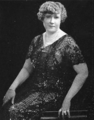
Beulah Louise Henry in a portrait from 1928.

See also
 In Spanish: Beulah Louise Henry para niños
